
Why you CPA is not your Tax Planner
Most CPAs focus on compliance—not strategy. Here’s how business owners can legally reduce taxes and retain more capital with proactive planning.
4/24/20263 min read
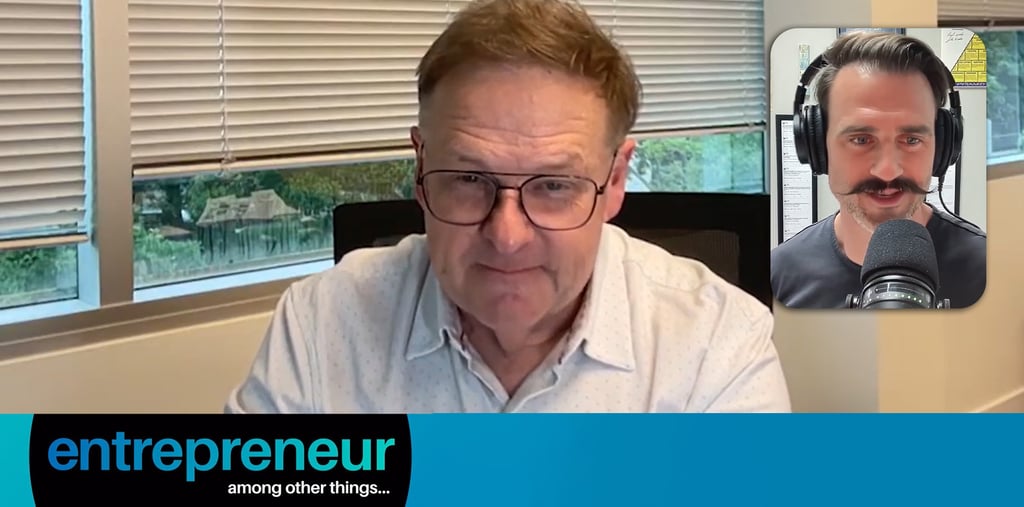
Why Your CPA Isn’t Your Tax Planner — And Why That Matters for Business Owners
Executive Summary
Most business owners assume their CPA is actively helping them reduce taxes. In reality, most are only receiving compliance—not strategy.
From the perspective of Peter Holtz CPA, this gap is one of the most expensive inefficiencies in growth-stage businesses. The difference between tax preparation and tax planning often determines whether a business retains capital or consistently overpays.
Watch / Listen to the Full Podcast
Spotify: https://bit.ly/3OySSNo
Apple Podcasts: https://bit.ly/3Q6pOxb
YouTube: https://bit.ly/4c8gd1x
The Core Problem: Compliance Is Not Strategy
Across thousands of tax returns reviewed annually, a consistent pattern emerges:
Most CPAs:
take the numbers provided
prepare the return
file on time
report the tax due
This is compliance.
What’s missing is forward-looking strategy:
identifying opportunities before year-end
structuring income and expenses intentionally
aligning entity structure with growth
minimizing tax exposure proactively
The distinction is critical. Filing correctly does not mean optimizing the outcome.
The Timing Issue: Why Most Planning Happens Too Late
One of the most common breakdowns is timing.
By the time a return is prepared:
income is already recognized
deductions are already missed or captured
structure decisions are already locked in
At that point, the result is largely fixed.
The IRS requires many taxpayers to pay taxes throughout the year as income is earned, not just at filing time. This reinforces a key reality:
tax strategy must happen during the year—not after it.
If planning conversations only happen in March or April, the business is reacting, not optimizing.
The Tax Code Is Built to Reward Certain Behavior
A common misconception is that the tax code exists purely to collect revenue.
In practice, it is also designed to influence economic behavior.
That is why it includes:
depreciation rules
investment incentives
industry-specific credits
real estate advantages
For example, depreciation allows businesses to recover the cost of assets over time, reducing taxable income. This is not accidental—it is intended to encourage investment and expansion.
The opportunity for business owners is understanding how to align with these incentives.
Financial Clarity Is the Foundation of Tax Strategy
Before any meaningful tax planning can happen, there must be clarity.
That includes:
accurate financials
clear visibility into margins
understanding of cash flow vs. profit
insight into where capital is being deployed
In complex businesses—especially those with inventory, receivables, or multiple entities—this clarity is often missing.
Without reliable numbers, tax planning becomes guesswork.
Structure Drives Tax Outcomes
Entity structure is one of the most overlooked drivers of tax efficiency.
According to the IRS, the structure of a business determines how it is taxed and what returns must be filed.
That means structure directly affects:
how income flows
how profits are taxed
how cash is retained
how reinvestment happens
how exit strategies are executed
For example:
S corporations pass income directly to owners, creating immediate tax exposure
C corporations are taxed separately, allowing different reinvestment strategies
Neither is inherently “better.” The correct structure depends on:
income level
reinvestment needs
growth trajectory
long-term objectives
Failing to revisit structure as the business evolves often leads to unnecessary tax burden.
The Hidden Pressure: Profitable but Cash-Constrained
A frequent issue among growth-stage operators is this:
The business is profitable—but cash feels tight.
This often happens because:
taxes are based on profit, not cash
cash is tied up in inventory or receivables
distributions do not align with tax obligations
The result is frustration:
high tax bills
limited available cash
difficulty reinvesting
This is not a revenue problem.
It is a planning problem.
Documentation and Audit Reality
Fear of the IRS often leads to overly conservative decisions.
In practice, the IRS operates through:
documentation
process
consistency
Deductions are not inherently risky—they must simply be:
legitimate
documented
aligned with the rules
For example, deductions like home office expenses are allowed when requirements are met, including regular and exclusive business use.
The key is not avoiding strategy.
The key is executing it correctly.
The Strategic Goal: Retained Capital
The ultimate objective is not just lowering taxes.
It is increasing retained capital.
Every dollar legally saved can be:
reinvested into the business
used to fund growth
deployed into assets
used to strengthen cash flow
For many business owners, the gap between earnings and retained capital is where the real issue lies.
Practical Implications for Business Owners
For businesses in the $5M–$20M+ range, especially those with operational complexity, the following questions are critical:
1. Is the current CPA relationship proactive or reactive?
If strategy is not part of the engagement, opportunities are being missed.
2. Is tax exposure understood before year-end?
Waiting until filing season limits options.
3. Is the entity structure still aligned with the business?
Growth often makes earlier structures inefficient.
4. Are financials decision-ready?
Without clarity, optimization is impossible.
5. Is enough capital being retained?
Tax strategy should support growth—not constrain it.
Conclusion
From the perspective of Peter Holtz CPA, the issue is not that business owners are doing something wrong.
The issue is that most are not being properly guided.
Tax compliance is necessary—but it is not sufficient.
The businesses that perform best financially are not just profitable.
They are structured, planned, and managed with intention.
And that includes how taxes are handled.
Key Takeaways
Most CPAs provide compliance, not proactive tax strategy
Tax planning must happen during the year
The tax code rewards specific economic behaviors
Entity structure significantly impacts tax outcomes
Many profitable businesses experience cash constraints due to poor planning
The goal is retained capital, not just reduced tax liability
Sources
LOCATIONS


Boston Office
55 Court St, Boston, MA 02108
Manteca Office
160 N Grant Ave, Manteca, CA 95336
Rancho Cucamonga Office
9045 Haven Ave, Suite 100, Rancho Cucamonga, CA 91730
Roseville Office
2270 Douglas Blvd, Suite 212, Roseville, California, 95661